Weakness of the gluteus medius and gluteus minimus muscles is common across a wide range of musculoskeletal conditions.
These are also one of the more challenging muscle groups to train as muscle compensations are so common with traditional exercises that attempt to target this key area.
So in this article I’m going to review 4 key Gluteus Medius Exercises that you can use to target these key muscles.
[Remember, if you are a My Rehab Connection subscriber all of these exercises can be found in your Exercise Library.]
Exercise 1: Hip Abduction Passive Range Lift Off
The real key with targeting the lateral gluteal muscles is ensuring proper form. So these first 2 exercises are really effective as they limit the patient’s ability to compensate.
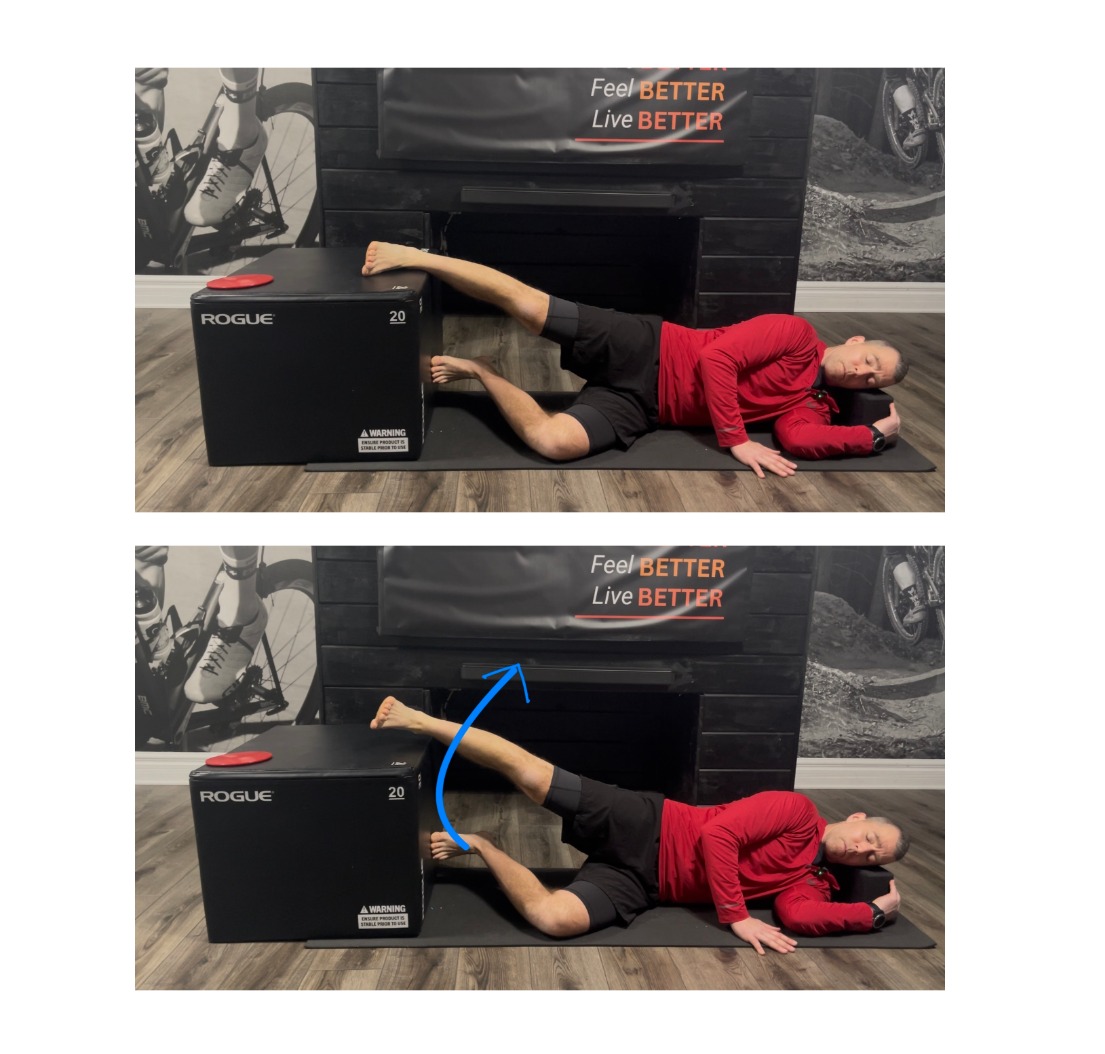
In this first exercise — hip abduction passive range lift off — we are focusing on training end-range hip abduction. As the muscle gets strong in the end-range position we can then back-fill the strength through the full range.
The height of the box or chair is important here. Ideally we want the resting position of the leg to 1-2 inches lower than their end-range position (i.e., the limit of their passive flexibility). Yoga blocks can be added to raise the foot position if needed.
From this position the patient needs to simply lift their foot up off the box, and hold. It is important to not allow the leg to flex or rotate, and to not allow the pelvis to rotate.
Typical prescription would be to work up to10 repetitions of 10 second holds (broken up into 2-3 sets if needed). Once this can be achieved we can progress to the next exercise.
Exercise 2: Wall Slides
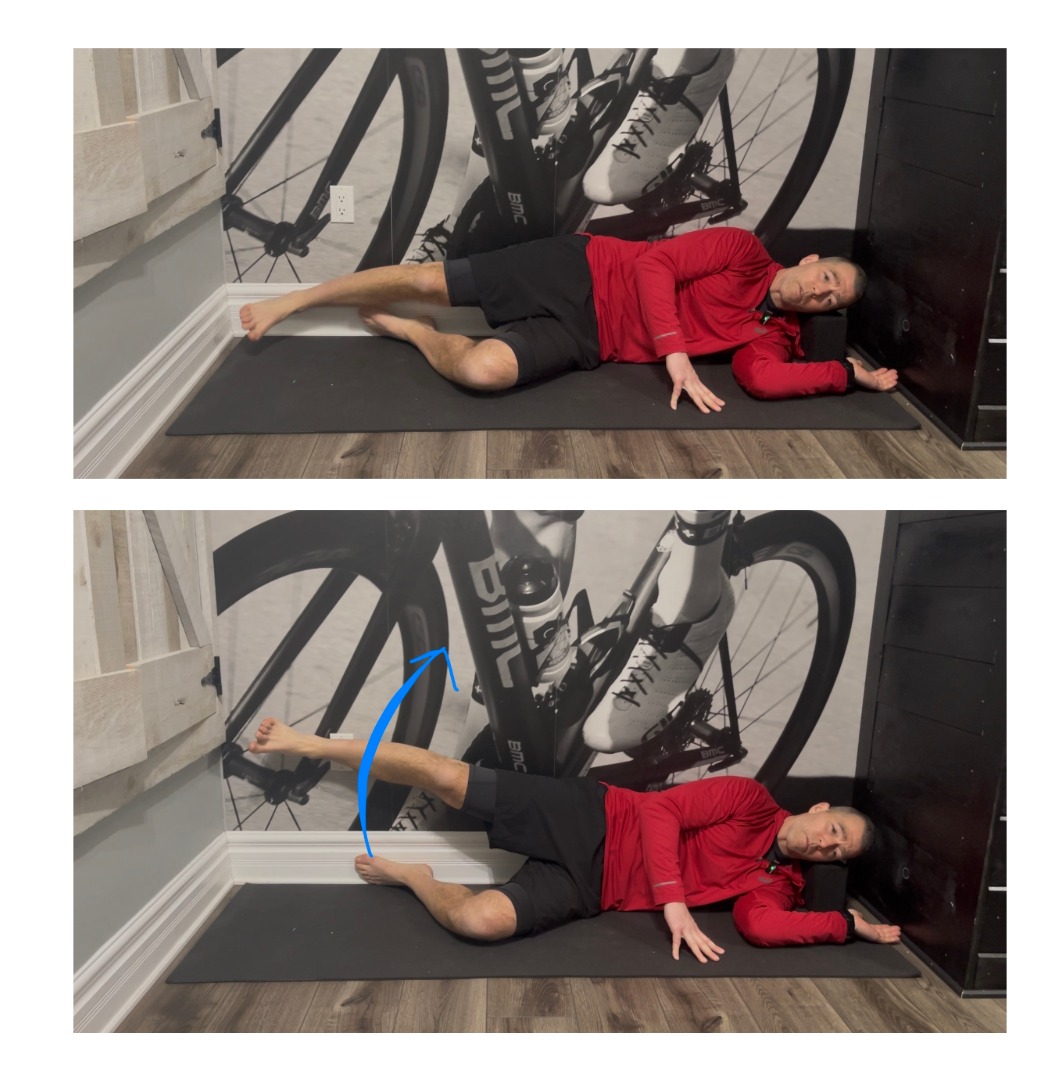
Side lying leg lifts are the most common gluteus medius exercise. But improper form is so common that these exercises often become counter-productive.
Performing this exercise against a wall eliminates these problems.
Start with the pelvis and shoulder flat against a wall. The top leg should be fully extended with the heel resting against the wall as well.
Lift the leg by sliding the heel up the wall. Keep the foot level so the leg doesn’t rotate.
Keeping the heel and trunk on the wall prevents the common compensation patterns of hip flexion and pelvic/trunk rotation.
Typical prescription would be to perform 3 sets to fatigue every other day (3x/week). When the patient can perform 3 sets of 10+ repetitions we can progress to the next exercise.
Exercise 3: Hip Abduction Hovers
With Hip Abduction Hovers we are starting to remove the constraints we relied on to prevent common compensations and starting to train the muscles through more varied joint angles and positions.
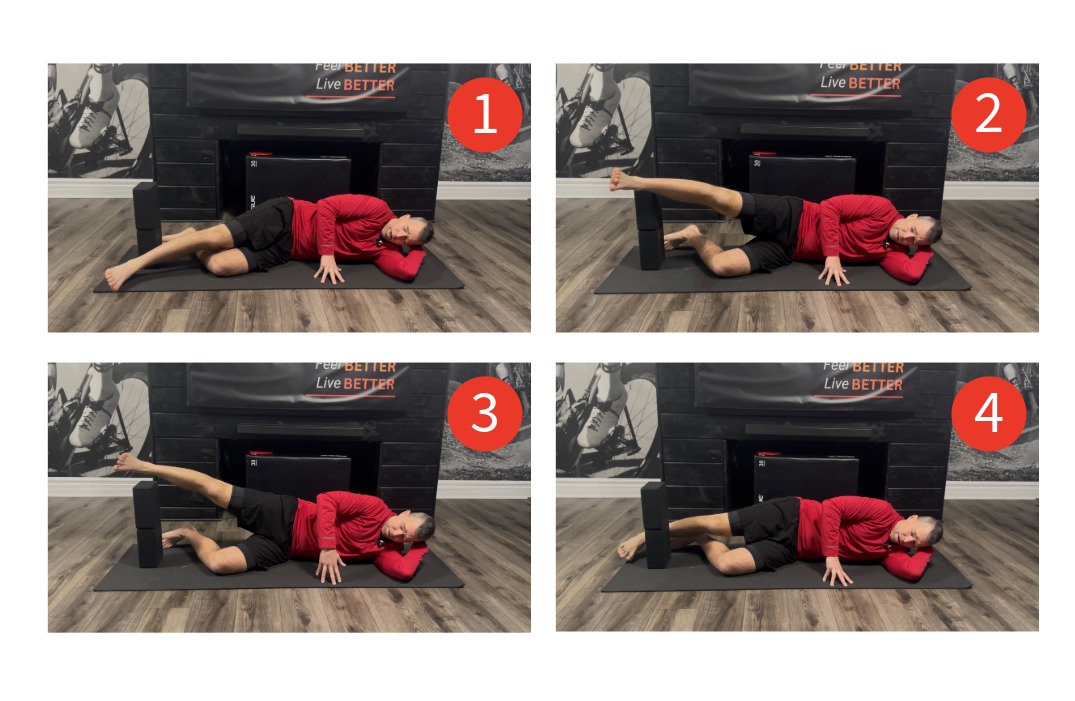
From a side lying position stack some yoga blocks down by the feet. The blocks should be in line with the hip and shoulder. The bottom leg is bent with the top leg fully extended and resting in front of the blocks.
Lift the leg straight up and then over the blocks, then lower back to the ground behind the blocks.
As the foot lifts the motion should stay isolated to the hip joint. Don’t allow the leg or pelvis to rotate.
Block height should be 1-2 inches below end-range hip abduction so it is a challenge to clear the blocks with the motion.
Typical prescription would be to perform 3 sets to fatigue 2-3 days per week.
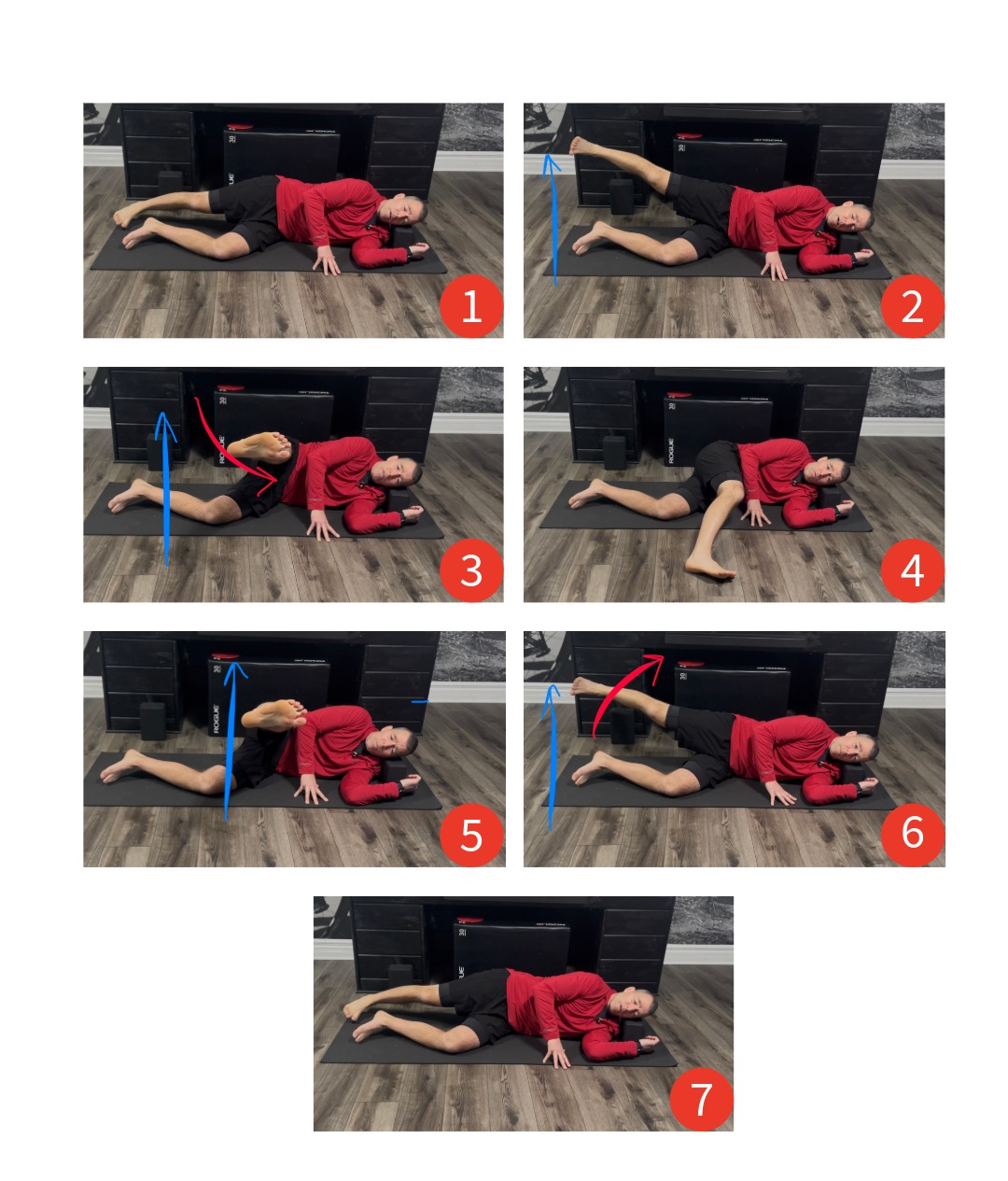
Exercise 4: Side Lying Hip Windmills
This final exercise progresses the theme of training the muscles through more varied joint angles and positions. Here we are removing the blocks and increasing the range of flexion and extension used.
From a side lying position the bottom leg is bent with the top leg fully extended and resting in front of the blocks.
The leg is lifted as high as possible towards the ceiling. Holding the leg in maximum abduction, bring the leg forward as far as possible, then slowly lower the leg to the floor.
Now, keeping the leg fully flexed, lift the leg into maximum abduction again. Holding the leg in abduction bring the leg back into extension, then slowly lower the leg to the floor.
This exercise is also effective to include in general exercise programming to help improve and maintain optimal hip function.